My Timeline
78 milestones
1998
I was born
I was born in Korosten’, Ukraine. The same day and month as Bill Gates, just a different year.
2001
LEGO, books, and imagined worlds
I spent most of my time playing with LEGO and reading The Lord of the Rings, world myths, and philosophy. Those years shaped me deeply.
- LEGO
- Books
- Imagined worlds
2004
Our first computer
Our parents bought a
Pentium 4computer. It opened the door to worlds I wanted to explore and eventually create myself.- Pentium
Wanting to make worlds
Morrowind made me very, very excited. I wanted to create worlds like that myself.
- Morrowind
- Oblivion
- Skyrim
- Gothic
- The Witcher
- Fable
- Two Worlds
- Dark Messiah of Might and Magic
- Mount & Blade
- Fallout
- Neverwinter Nights 2
- Star Wars: Knights of the Old Republic
- Disco Elysium
- Warcraft III
- Total War
- Civilization
- Half-Life
- S.T.A.L.K.E.R.
- Dishonored
- The Lord of the Rings
- Warhammer 40,000
A little more
Over the following years I played Oblivion, Gothic, and Fallout too. I loved getting lost in their worlds, their stories, and the freedom to explore. I kept dreaming about making something like that.
Computer magazines, books, and games
Computer magazines introduced me to the world of programming. I spent much of the rest of my time reading classical literature and trying to create games.
2005
My first attempt at a novel
I tried to write my first novel. I was so disgusted with what I’d written that I burned all the notebooks.
- Pen and paper
2010
Learning the web from CDs
I started learning
HTML,CSS, andPHPwithout an internet connection at home.- HTML
- CSS
- PHP
A little more
Money was tight. I went to internet cafés and to teachers who could help me get online, downloaded websites onto CDs, and brought them home.
Then I read those pages offline and tinkered with them on our computer.
2011
Learning 3D, and the English to keep learning
I began experimenting with 3D graphics, downloading courses and books on
CGI,Maya, andBlenderand working through them on my own.- Maya
- Blender
A little more
I also taught myself English, reading books with a dictionary beside me so I could learn from more sources. It felt like a matter of life or death for my future.
2012
Making games with my best friend
My best friend and I tried to make several games in
Unity, learningC#as we went. Along the way I built Don’t Crash and RandomRush.- Unity
- C#
- ActionScript
- Adobe Flash
- Android
RandomRush on YouTubeA video from our YouTube channelA little more
I started paying less attention to school and putting more time into learning on my own.
Don’t Crash is a small car game: you dodge traffic for as long as you can. RandomRush, also called AliensRush, involved enemies and a breaking-apart mechanic. I kept building it and later tried to sell it.
At some point during those early experiments, we also started a YouTube channel. We abandoned it quickly. We still regret not sticking with it.
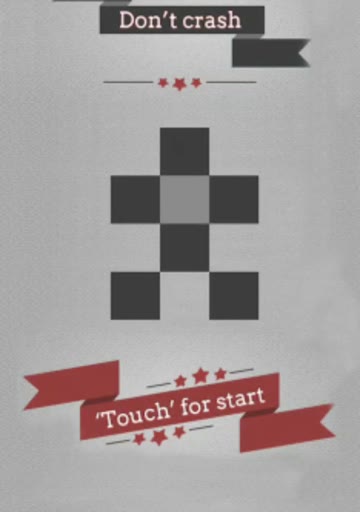
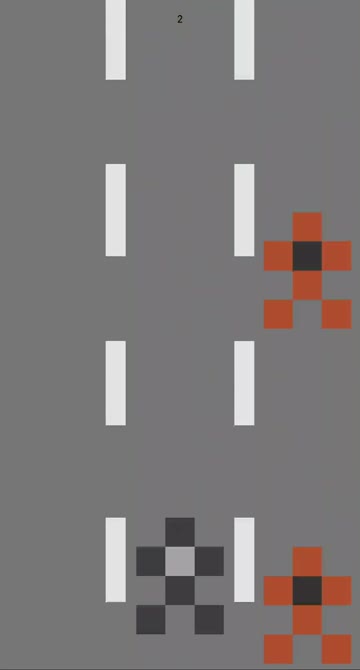
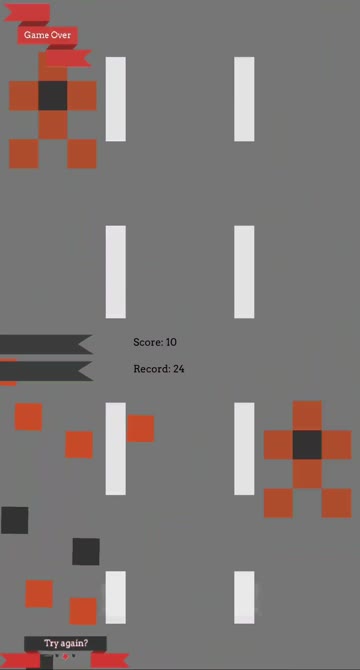
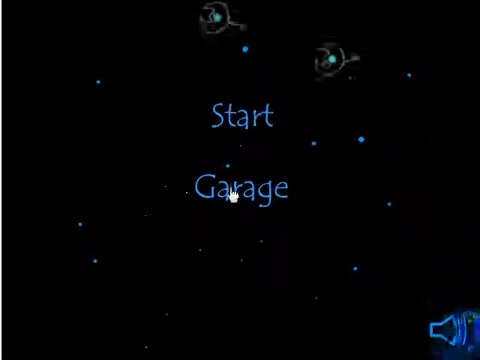
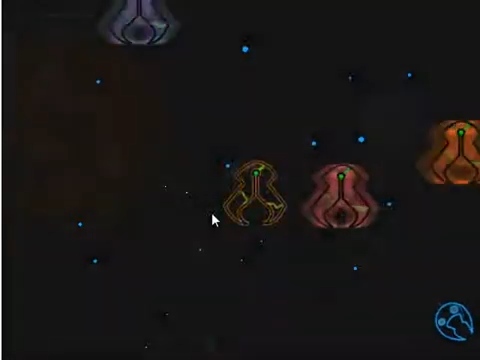
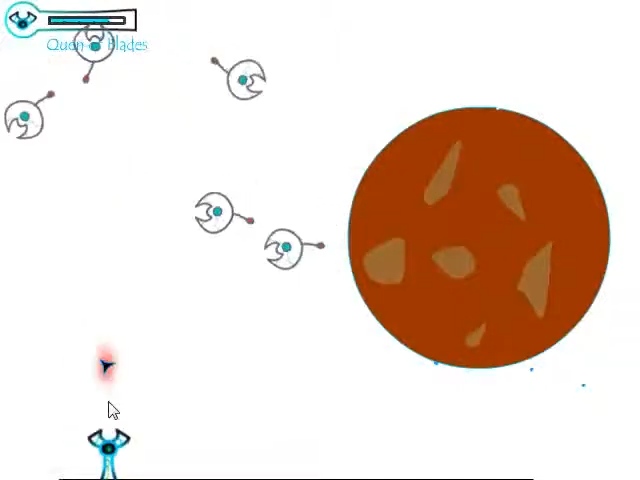
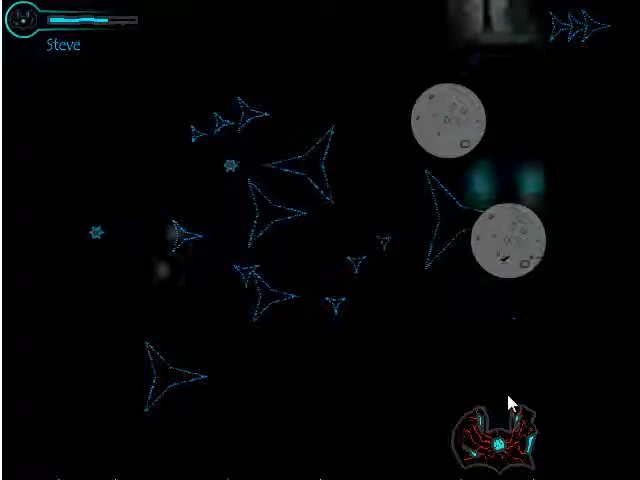
Don’t Crash screenshots and a gameplay clip, followed by the menu, garage, and two fights from Aliens Rush.
2014
My first try at assembling and managing a game dev team
I came up with an idea for a game, The Archer, brought all my friends together, and inspired them to create it.
- Dropbox
A little more
We gathered weekly to discuss updates and next steps. Unfortunately, the experience was a disaster. My teammates just forgot to do their tasks and weren’t serious about it.
Looking back now, I understand we were just kids. But for me it was a pretty serious matter, and my first frustration with assembling a team.
2015
Another game try: SandBox
I had a small idea and a goal: release SandBox, a mobile game where you turn a maze by hand to move sand through it.
- Unity
- Photoshop
- Android
Explore the projectWatch SandBoxA little more
My friend’s father bought a Google developer licence for me.
The original video shows how the maze and the sand move.
I was sending it to publications in January 2015. After a few weeks in the store, I deleted it. I was too critical of my own work.
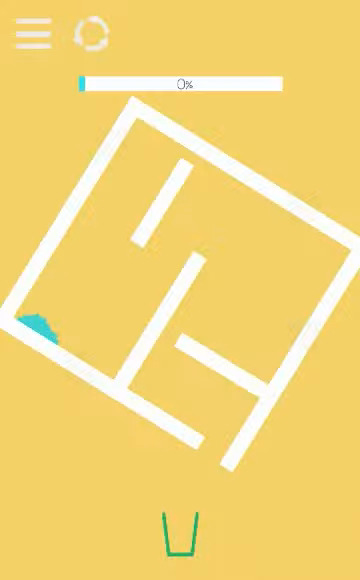
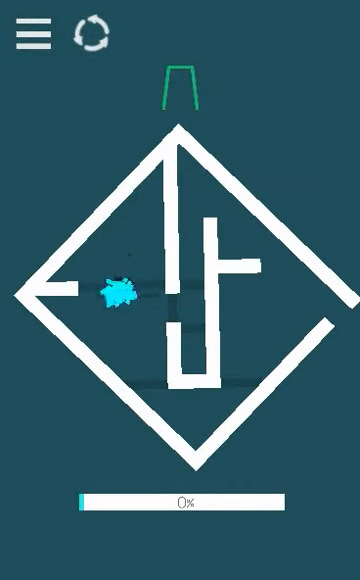
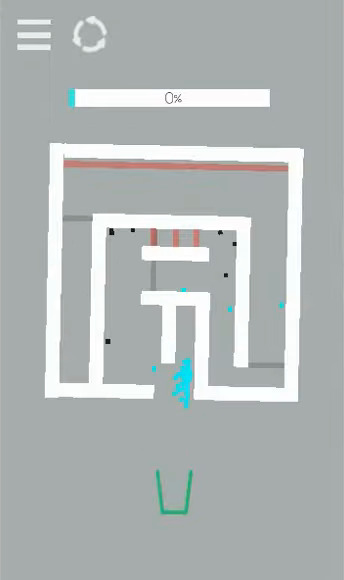
Three levels from the original SandBox trailer. Finding a way back
Around this period, I went through roughly six months of depression. I hardly got out of bed or went outside.
- Darkness
- Apathy
A little more
After reading a lot of classical literature, I decided to give it another try. I started learning and practicing again, and made a CV with my portfolio.
I left my age off the CV and sent it to every
JavaScriptdeveloper opening I could find.My first developer job
At sixteen, I joined FundSeeder as a front-end developer. My portfolio had helped me get my first professional role.
- JavaScript
- React
- Reflux
- AJAX
- i18n
FundSeederA little more
I worked on page layouts and dynamic interfaces with
ReactandReflux. The team was moving an existing product to newer libraries, so I had to learn the codebase as well as the tools.My lead and CTO was Vladimir Zheleznyak. I learned so much just by watching him work. No one else has taught me like he did.
I left the job in pursuit of bigger offers and bigger cities. It was a bad decision.
An interview on DOU
DOU published an interview about me and how I got my first developer job at sixteen.
Read the DOU interviewA little more
DOU is a Ukrainian community and publication for software developers, with interviews, industry news, and discussions.
My first talks
After the article, I was invited to give a few talks, including one for GoITeens and another about Generation Z.
- Microphone
GoITeens eventGoITeens photo postGeneration Z photo postXYZ unconference recollectionA little more
I met so many great, smart people around that time. A lot of them became lifelong friends. I felt on top of the world.
An office job in Kyiv
After FundSeeder, I moved to Kyiv and took an office job. I was earning money, but struggling badly.
A little more
I was trying to finish school, dealing with obstacles and prejudice about my age, and supporting my mother after her divorce.
The pressure became too much. I started smoking and drinking, and went to psychotherapy.
2016
Betting on
ReactandReduxI left the office job and went freelance. I chose to focus on
ReactandReduxbecause I thought the technology was excellent. For me, that bet paid off.- JavaScript
- React
- Redux
- TypeScript
- Angular
- i18n
A little more
Freelancing was where I learned
Redux. I usedTypeScripton client work and later learnedAngular.For Enwrap, I built and revised dashboard date-range controls and filters, then worked on chart loading, saved filters, and dropdowns.
For Govlytics, I worked on a web interface for searching and filtering contract records. My merged changes included vertical navigation, selected-filter logic, and formatting for amounts and signed dates.
My early web work also included frontend work for Scuelo, a French social-network app that had not yet been released, and single-page applications for a cultural institution and Opensight.
Freelance: Language Learning App
I did freelance
JavaScriptwork on a mobile language-learning app for Brainglass.- JavaScript
- i18n
Explore the projectA little more
The reading-widget work included processing text, matching idioms, opening translation popups, and highlighting words according to the learner’s knowledge.
I revised the implementation through colleague feedback. Matching logic, code quality, and differences between browsers were part of making the interaction work.
Finishing school while working
I completed school remotely, ahead of schedule, while already earning a living as a developer.
Anonymous Geek
I made a terminal-style game about becoming a programmer.
- JavaScript
- HTML
- jQuery
- Sass
- Node.js
- Express
- Gulp
- Browserify
- Babel
Explore the projectPlay Anonymous GeekOriginal sourceA little more
The player could look for fictional jobs, take on projects, simulate coding, improve skills and earn in-game money. I built commands for moving through that little programming career, including a history of earlier commands.
Teaching front-end development
I taught frontend development at GoITeens, preparing lessons and practical exercises.
Explore the projectA little more
I was a passionate and unconventional teacher. I tried to make lessons as practical and fun as possible.
A lot of the kids I taught became lifelong friends from those times.
2017
Relocation: Prague - Mews
I moved to Prague to work as a frontend developer at Mews, a Czech startup building software for hotels.
- JavaScript
- React
- CSS
- Immutable.js
- Backbone.js
- Node.js
- Express
- i18n
HTML, CSS and JavaScript certificateFront-End Web UI Frameworks and Tools certificateObject Oriented Programming in Java certificateData Structures and Performance certificateA little more
The offer came in October 2016. I worked on the frontend of Distributor, the hotel-booking tool.
My changes to Distributor covered localization and rate-selection text, photo sizing in the rate tabs, and responsive layouts with shared widths and media queries. I also worked on a dynamic calendar and interactive,
Excel-style tables.I wanted to escape my ties: my family, my friends, Ukraine. I wanted to try something new and see what living in Europe, in a cultural capital, was like.
I was proud that my Coursera certificates were accepted as part of my application. I received official approval from the embassy and a working visa without a university diploma.
PolyVocab and other toys
On weekends I worked on PolyVocab, a
Chromeextension that let me look up words as I read.- Chrome
- JavaScript
- React
- Redux
- Radium
- Node.js
- Express
- Google Translate API
- Firebase
- Google Cloud
- webpack
- Babel
- Unity
- C#
PolyVocab Chrome extension on GitHubPolyVocab translation server on GitHubA little more
I also wrote and published Exy, a small proxy extension for
Chrome.For Mathify, I adapted the menus and localized the labels in Maths Challenge, an arithmetic game by Swapnil Rane.
Sinusify was a
Unityprototype where you climbed along a sine wave and scored points for height.Reassessing what my time was worth
The excitement of living abroad gave way to loneliness and the return of depression.
A little more
At first, I enjoyed the work and the people around me. Later, without close friends or a support network, things became much harder. I couldn’t integrate into the team at work.
I struggled with what felt to me like a startup culture of constant hustle. I had to reconsider what I was doing, what mattered to me, and what was worth my time.
I decided that being near my relatives, my friends, and my cat while they were still alive mattered more to me than integrating into life in Europe.
LSD and new interests
I tried LSD. A friend gave me a small amount.
- Bicycle
A little more
Before that, I had been reading Hesse, Greek classics, and German poetry.
Afterwards, I started meditating and reading about Hinduism and esoteric ideas.
Back in Ukraine, beginning again
By the end of October, I was back in Kyiv: freelancing, reading philosophy, and starting to learn Latin.
A little more
Leaving Prague and ending the working relationship were separate steps. I continued some remote work after returning home; my cooperation with Mews ended in November.
We did not part on the best terms. By the end, I was completely burned out and couldn’t be productive. But I had learned a great deal about property-management systems, the hotel business, and integrations.
Latin became a new part of my days. I worked through grammar and translation exercises, alongside freelance projects and a growing return to teaching.
2018
Building Fulcrum together
I wanted to make a new software agency! I was inspired by teal organizations and Holacracy, found a cofounder in Ihor Prokopenko, and made my first real attempt to start a company.
- React
- Redux
- Node.js
- Firebase
- MongoDB
- Redis
- RabbitMQ
- AWS
- Facebook SDK
- Google APIs
- i18n
Friends English ClubScoob-e historical portfolioA little more
I found clients on Upwork. Ihor brought in students who could work for lower pay. I preached autonomy and expected everyone to work independently, but the students needed guidance.
In the end, I spent more of my time delivering what we had promised clients, juggling several projects at once.
I worked on orders and vendor functionality for AiiRush before the agency period, then coordinated team work on the food-delivery app. It involved orders, vendors, drivers, live updates, vouchers, and payments.
I also coordinated work on OutfitChecker, a mobile app with profiles, posts, competitions, social sign-in, and an admin interface.
On Scoob-e, I worked on mobile architecture and Facebook and Google integrations.
Alongside the agency work, I was programming, fixing, and preparing releases for FriendsEnglish, the English-learning project for Friends English Club.
There was also eForms: estimates, client calls, and work on a dashboard pilot. I don’t remember exactly how many projects overlapped.
I began to understand how the business worked, and felt that my ideals were incompatible with it.
I was running low on money. My earnings went back into the company, while my brother and my cats developed cancer and I needed money for their care. I had to find better-paying work.
I was crushed by all of it. I left the company and left everything to Ihor.
Team lead: Happiness Online at Hedgehog
I led development of a progressive web app around Alla Klimenko’s programme, daily exercises, and masterclasses.
- JavaScript
- React
- Redux
- React Router
- PWA
- GitLab CI
- i18n
Alla Klimenko and Happiness Online · 2019A little more
As team lead, I worked hands-on on the app’s architecture and implementation over several months while guiding a small junior team.
PWAswere still quite new at the time. I had to develop my own solutions for offline sync.Alongside my own implementation work, I reviewed changes for daily plans, achievements, leaderboards, and masterclasses.
The project was a success. We met the deadlines, and the client was happy with the quality and the result.
Creating courses at Ampli
I returned to teaching. I just couldn’t say no.
Explore the projectA little more
I started not only creating curricula and teaching them, but also making video lessons and preparing other teachers.
The material covered frontend development and
Unitygame development. I wrote an introductory scripting draft with a functions-as-LEGO analogy and a balloon-popper game idea.By autumn, my Ampli work included product management and observing other teachers. I began teaching my own student group in November 2018; the first meeting included a game-design session.
I wanted lessons to give children something they could try, make, and understand for themselves. Teaching became one of the most beautiful parts of my life. It gave me friendships that have stayed with me, though the work was exhausting and the pay was low.
Writing an introduction to game development
I published an introduction to game development for Russian-speaking readers.
Original article on MediumA little more
I wanted to explain how games are made and help people find a way to start. The article covered pre-production, production and post-production, then the roles involved: design, art, programming, level design and testing.
It was my first attempt at writing in that format. I hoped it would become a series.
2019
NUIS: tools for my students
I built NUIS so my students could start a local web server without learning terminal commands first. I also made a separate classroom chat example.
- Go
Explore the projectA little more
In NUIS, students chose a folder and started or stopped its local web server.
I published the source and a macOS installer. The project remains available as an archive.
For another Ampli classroom example, I connected a web interface to the FChat server written in
Go. It included room selection, nicknames, messages, and polling.A message moving between the interface and server made the relationship between the two sides visible.
A senior front-end role at GlobalLogic
I joined GlobalLogic as a senior frontend developer and worked on tools for RepairSmith, a car-repair service.
- React
- JavaScript
- CSS
- Node.js
- Express
- i18n
A little more
Family responsibilities and medical expenses made earning more feel urgent. I stepped back from teaching and put more of my time into paid engineering work.
From April 2019, I worked on internal interfaces and business logic for RepairSmith around repair requests, customers, vehicles, orders, and invoices. The work included understanding existing
APIs, changing frontend behavior, and reviewing code.One task was auditing the older repair-request
API. I traced endpoints back to the screens using them and recorded which calls appeared unused. I also worked on responsive layouts.At that time, I tried to find a work-life balance. I started a lot of hobbies and tried to do my work as well as I could. It was a good time, until the next depression hit.
Vueand canvas at HedgehogI picked up another Hedgehog assignment, continuing work left by a
Vuedeveloper.- Vue
- JavaScript
- Canvas API
- i18n
A little more
It was a bike shop website where customers could customize their own bikes. I worked on canvas sizing and cropping and mentored the two mid-level developers on our young team.
2020
Athens to Corinth by bicycle
I felt trapped between work and home. I decided to fly to Greece and finally live the way I’d dreamed. Nomading!
- Bicycle
- Sea
A little more
I always wanted to travel the world. I started working to earn money to learn and become a better game developer and artist. Also to live and travel. But something always came up, and I had to earn more and more. Working as a software developer was the only way I could do that.
I bought a bicycle and rode from Athens through Eleusis toward Corinth, with the sea and mountains along the way.
My journal called it a small pilgrimage and the longest journey I had then made under my own power.
After that experience, I fell in love with travelling by bicycle. It just hits different. I can see everything, get plenty of exercise, think, and breathe fresh air.
Turning a friendship into a game
I made Awakening, a small text game about childhood, as a gift for my best friend.
- Unity
- C#
- Unity UI
- WebGL
Play AwakeningAwakening on itch.ioA little more
It is a Russian story with keyboard choices, local memes, and memories from our childhood. It was written for one particular person.
2021
Maps, interfaces, and a
ReactmigrationOn the Surfsight/Lytx assignment, I worked on map interfaces and polling, and planned a frontend migration to
React. It overlapped with my RepairSmith work.- React
- JavaScript
- i18n
A little more
The
Reactwork involved planning the architecture and the steps of the migration.For a period, my days were divided between Surfsight and RepairSmith Tools: implementation, code review,
APIquestions, and coordination.CutToLove
I made CutToLove, a small game about finding a way toward someone by slicing through obstacles.
- Unity
- C#
- Smart Slicer 2D
- Unity Animation
- Inkscape
- WebGL
A small habit bot
I wanted to make a small bot that would help me and someone close to me keep useful habits. I was reading about habits and thinking about how to make the process feel more like a game.
- Python
- FastAPI
- Google Cloud
- Firebase
- cron
A little more
I added notifications, reminders of happy moments, and some virtual-pet features. I also worked on remembering user state and started working on graphs. By July, notifications were reaching both of us, and someone besides me was actually using the bot.
It was still rough. One day I was happy to see the notifications arrive; the next I was refactoring and trying to understand why the cron notifications were not working.
Moving into web 3D
A clothing and virtual try-on project brought me closer to graphics work.
- Babylon.js
- JavaScript
- WebGL
- i18n
A little more
In mid-to-late 2021 at GlobalLogic, I moved toward a project using
Babylon.jsfor web-based 3D clothing and fitting. Technical direction, customer conversations, and responsibility for a team were part of the role I took on.I was still learning the graphics side. One investigation was how to support garments made from several 3D models. I compared changing the product data structure with adding custom-model loading, weighing a quick addition against changes across more of the app.
Joining Ubisoft
I joined Ubisoft as a senior full stack engineer, working on internal tools and interfaces. It was my childhood dream.
- JavaScript
- React
- Node.js
- Express
- Python
- MongoDB
- ORMs
- Docker
- Enzyme
- React Testing Library
- i18n
2022
The war changed the shape of life
Work continued, but my state of mind and my ideas about life changed deeply.
- Nuclear warning
A little more
Displacement, grief, and the difficulty of concentrating became part of ordinary days. I tried to keep working and find ways to help.
The war changed how I thought about freedom, responsibility, the future, and what deserved my time.
Working on HelpUkraine
I began working on the HelpUkraine project, which included merchandise.
- Squarespace
- Printful
An intense immersion in
AIImage generation, language models, and machine learning began to occupy much of my attention.
- Math
A little more
I was exploring image generation in 2022, then studying and experimenting much more intensively with machine learning and language models in 2023.
I wanted to understand the technology and bring it into my work, my creative projects, and the things I hoped to make next.
Reincarnation: designing a life
I began working on Reincarnation, a game idea about the beauty of a life. I wanted choices to gather into a person: habits, skills, relationships, and consequences that would return later.
- Notion
A little more
I sorted ideas, wrote questions, and kept a small development diary. I compared different ways to play: several choices, left-or-right swipes, life periods built from events, and prepared story arcs with variation inside them.
2023
Learning what sits beneath the models
I completed Supervised Machine Learning: Regression and Classification on Coursera.
- Python
- NumPy
- scikit-learn
A little more
I studied regression, classification, gradient descent, and regularization through the DeepLearning.
AIand Stanford course.That was one completed course within a wider period of study: neural networks, language models, diffusion, and experiments with creative software.
Trying to bring
AIinto creative workI worked on a
Photoshopplugin that let me generate images with the latest diffusion models. Getting it to work was a nightmare, but I managed.- Photoshop
- Vue
- Stable Diffusion
A birthday gift that answers back
A playful challenge arena where an
LLMjudges the player’s invented solutions.- Next.js
- React
- JavaScript
- CSS
- OpenAI
- Axios
- Vercel
- Sentry
Play the birthday arenaA little more
I made a personal game with absurd goals, short written actions, limited lives, and locally saved progress.
The experiment was in the interaction: an open-ended answer could become the next move in a game.
myInnerLight
I learned
Swiftand built aGoogle Cloudbackend for a mobile app that usedLLMsto write personal messages of encouragement. You’d tell it what you wanted support with and when you wanted to hear from it.- Swift
- SwiftUI
- iOS
- JavaScript
- React Native
- Expo
- Android
- Python
- Google Cloud
- Firebase
- Firestore
- Cloud Functions for Firebase
- OpenAI
- i18n
Explore the projectA little more
I designed the app myself, starting with hand-drawn sketches and wireframes. Within the first month, I had a working prototype. You could answer one question about your goal and then read the messages written for you.
I built the first
iOSscreens inSwiftUIand designed the database inFirestore. Background workers generated new messages for each goal. I had notifications working by early October and anAndroidbuild to test by December.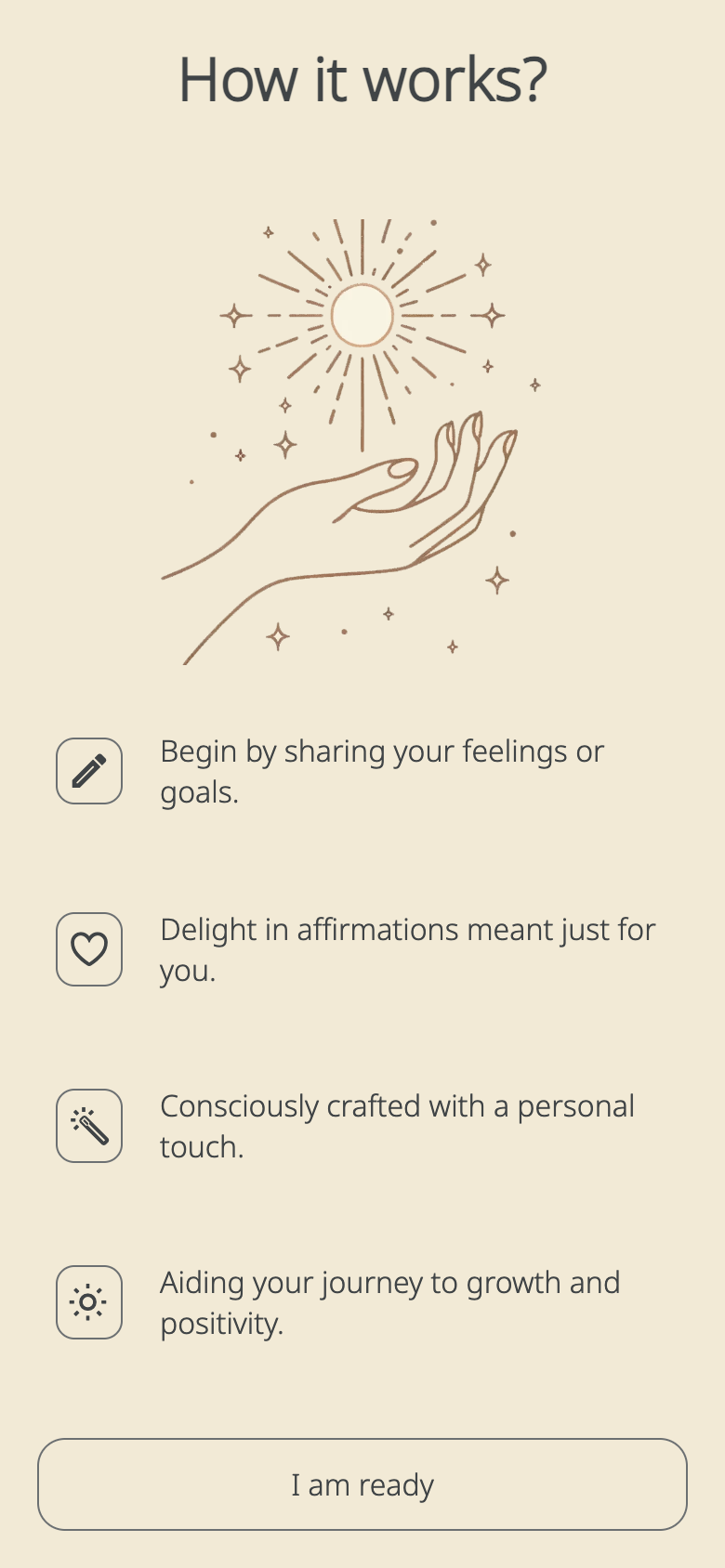
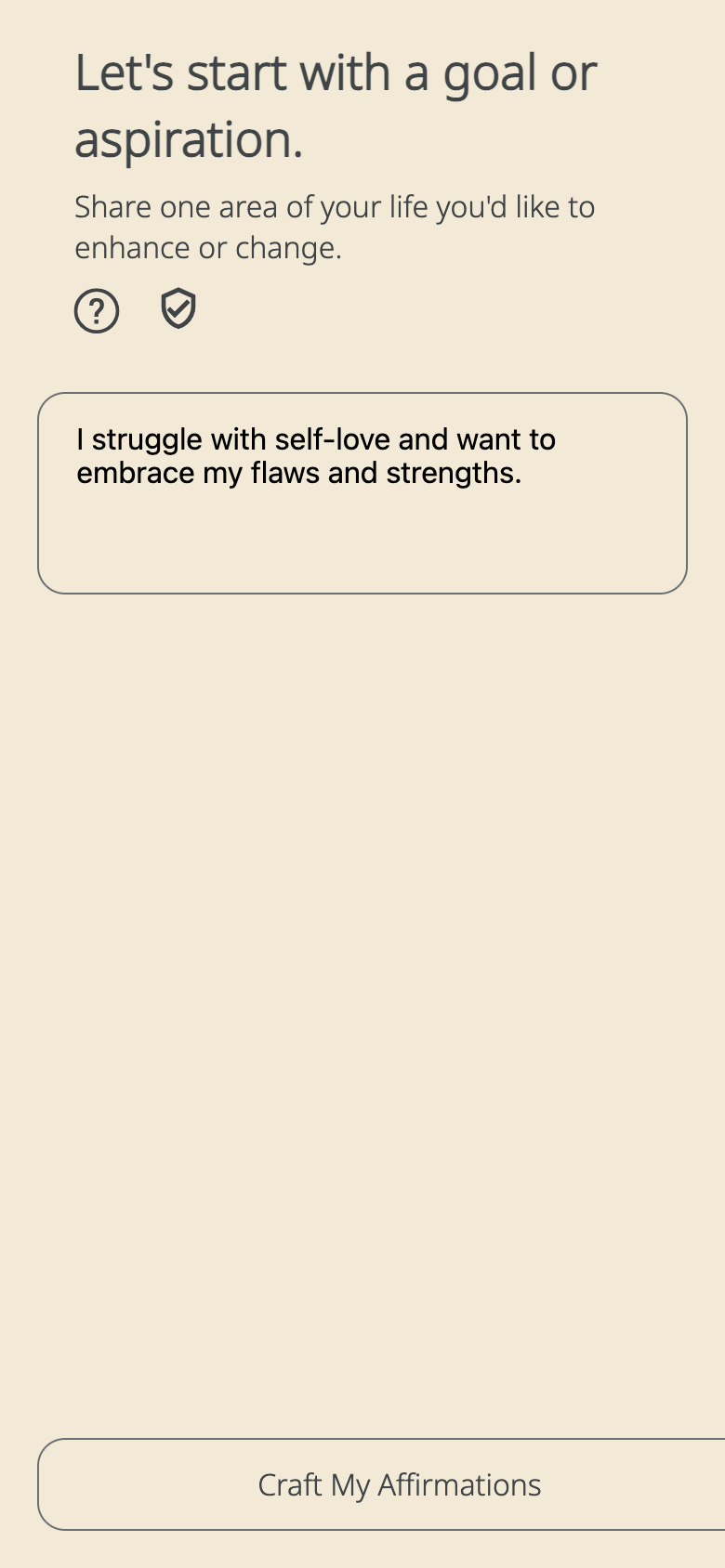
The welcome screen and goal form, rendered from the original 2023 app source. Beginning AVA / ReadAnyway
I loved reading books in their original language. I kept long lists of things I wanted to read, from poetry and difficult novels to scientific papers. I loved an audiobook that sounded like a performance.
- TypeScript
- React
- React Native
- Expo
- Next.js
- PWA
- Swift
- Kotlin
- Android build tools
- Python
- FastAPI
- Node.js
- NestJS
- RabbitMQ
- Firebase
- Firestore
- Prisma
- PostgreSQL
- IndexedDB
- Clerk
- Docker
- Hetzner
- OpenRouter
- MCP
- Claude
- DeepSeek
- Google AI
- OpenAI
- ElevenLabs
- Whisper
- EPUB
- OCR
- Mistral OCR
- Figma
- Linear
- i18n
Explore the projectA little more
At the same time, I could talk about
AIfor days. I was restless and, honestly, alarmed. To me the world had already changed, and few people I talked to understood why I felt so strongly about it.I kept coming back to teaching. I wanted to use what
AIcould do already, and what it might do next, to help people learn more and understand difficult things. Books were where I wanted to start.The readers I used frustrated me. A flat narration could spoil a book I loved, and if I switched from listening to reading, I had to hunt for my place in the text. I wanted a reader that could keep the two in sync.
I started learning what it would take to build a startup around that idea. I asked my friends, my students, and my partner to help me build the reader I wanted to use.
2024
AVA begins to speak
In our first narration demo, AVA read a book aloud sentence by sentence. Then we built a way to talk with it. You could interrupt AVA mid-sentence to ask about a passage.
- TypeScript
- React
- Web Audio API
- OpenAI
- Whisper
- ElevenLabs
Explore the projectA little more
We connected speech-to-text to an
LLMand used text-to-speech to read its reply aloud. The delay was terrible. Even a short question left an awkward silence before AVA answered.I was convinced voice would become a big part of how people used
AI. I spent a lot of time studying how to shorten that silence and how to get AVA to stop talking the moment someone wanted to cut in.We were working on this in January. That April, LiveKit added a
Pythonvoice assistant with built-in interruption controls. In May, OpenAI demonstrated real-time voice conversations with GPT-4o.AVA at We.Brave
I was learning how to turn the reader into a business. At We.Brave, our team spent two weeks rehearsing the pitch and talking it through with mentors.
Explore the projectA little more
We finished the bootcamp without winning. The mentors’ questions helped me think beyond the pitch. The more I learned about venture capital, the less I wanted to build the next Airbnb or chase a billion-dollar exit.
I kept coming back to Wikipedia. I loved being able to look up one unfamiliar idea and follow it as far as my curiosity took me. I wanted to give people that same freedom while reading a book. As I learned how publishing worked, I began to understand why reading an ebook could still be so frustrating.
For about a year, I gave AVA every spare hour I had. I wrote code, looked for funding, worked through the finances, and tried to figure out the business model and the marketing. I was overwhelmed. The hardest part of all was building the reader itself.
Back in the classroom, this time with
AIPreparing and teaching practical
AIlessons at Ampli.Explore the projectA little more
Preparing a lesson could take much of a Saturday: finding examples, revising the explanation, and deciding what students could try for themselves.
For one lesson plan, I worked through the difference between a hand-written program and an artificial neural network, using a cat example from teaching material to explore inputs, weights, and bias.
The curriculum kept evolving alongside the tools, with curiosity and practical work at its center.
Leaving Ubisoft
By August, the tension in the studio had reached a breaking point. I wanted to move to another team, and management turned down the transfer.
- Burned wood
- Pills
A little more
I’d been volunteering to help other departments in my own time. I was penalized for doing that work.
For months I asked for a sabbatical so I could rest and recover. After being turned down again and again, I knew I had to leave. It was a hard decision. I was burned out and seriously ill, and I couldn’t keep working like that.
Returning to MetaModern
I came back to MetaModern and wrote my first post there in a long time. I wanted to write about building a startup and the journey around it.
AVA community on TelegramA little more
I love writing and teaching. MetaModern was a place for that part of my work. Later, I turned the space into AVA Books.
Continuing to learn generative
AICompleting Introduction to Generative
AIfor Software Development.- Python
- PyTorch
- ChatGPT
A little more
Alongside my own products and client work, I continued structured study through Coursera. This was a completed course within that ongoing learning, rather than an endpoint.
A year of illness
I got sick around the time I left Ubisoft. I was paralyzed for a year and needed heavy medication.
- Pills
Explore the projectA little more
My partner kept working on AVA alone for another year. I went deep into debt and had to start freelancing again.
Aider
Aider was a video-summary and translation prototype we built as part of AVA for a Google hackathon. As I remember it, we spent a few days on it. We didn’t win, but we had fun building it together.
- Chrome
- TypeScript
- React
- HTML
- CSS
- Tailwind CSS
- Vite
- Chrome AI APIs
Explore the projectA little more
We had working summary and translation
APIsusing Google models. I worked on streaming the summaries and combining them for longer transcripts. I wanted to show the result in a panel beside the YouTube video.I was still deciding what to finish and test. Videos without subtitles and summaries that could omit an important point were questions I needed to work through.
2025
A prototype for apartment operations
I explored Telegram and
Firebaseworkflows for the cleaners, concierges, and administrators at KyivApts.- Python
- Django
- Telegram
- Firebase
- Firestore
- i18n
A little more
I planned the workflows and worked toward connecting them with existing property-management software.
The work reached a demo and cloud-project setup.
Building a
Pythonclassroom for CodeyI used
Pyodideto runPythonin the browser. Learners could edit aTurtlerace, run it, and watch the result beside their code.- Python
- Pyodide
- Canvas API
- i18n
Explore the projectA little more
In a three-day sprint in May, our team built a lesson page with exercises, quizzes, and an
AItutor. The tutor could see the task, the learner’s code, and the output from their run, so they could ask why their program behaved the way it did.The client and I became friends while building Codey.
An
OutlookAIadd-in, and a rollout that stoppedI worked on an
Outlookadd-in for drafting new emails and writing replies for UHY.- Outlook
- JavaScript
- LLM
- i18n
A little more
My work covered implementation, prompting and formatting, and the different behavior needed for a new email or a reply. I also worked on demonstrations and installation guidance.
A support assistant for JetOctopus
I worked on a prototype that answered questions using JetOctopus’s documentation, with an
APIand a small chat interface.- Python
- LlamaIndex
- Google Gemini
- OpenAI
- FastAPI
- Next.js
- Render
A little more
My work ran from discovery through documentation ingestion, indexing, an
API, and a chat demo. The prototype could return relevant document passages separately from generating an answer with supporting sources.The first delivery helped us look for gaps in the source material and the answers. The client’s feedback led to more setup work and discussions about retrieval speed, streaming replies, and deployment on their infrastructure.
Making podcasts for Antoshka’s School for Parents
A friend I could talk to for hours about
AIintroduced me to one of the project leads at Antoshka. The team was starting a school for parents and wanted families to be able to listen to its articles.- NotebookLM
- ElevenLabs
- TTS
AntoshkaSchool for ParentsA little more
Recording each article as a podcast would have taken more time and money than the team could spare at that stage. Working with Fantastic AI Studio, I built an audio pipeline that turned the articles into podcast episodes.
I tried different voices and shared the demos with the Antoshka team. They were amazed by how good their articles sounded as podcasts.
Taking ConsolLine’s logistics operations digital
ConsolLine hired me to help turn a logistics company that ran largely by hand into a digital operation. Staff compiled quotes in
Excel, sent bookings by email and checked carrier websites for shipment updates.- Notion
- Excel
A little more
I spent several weeks with people in each department, learning how freight moved, where handoffs broke down and which tasks people had to repeat. Alongside that, I studied how other logistics companies had digitized the same work.
I laid out a phased roadmap toward automating most of the operation. The first steps targeted the places where the company was already losing time and money, including repeated data entry from freight documents and the manual work of putting together a quote.
Auditing MyFreedom’s
DjangoservicesThe owner of MyFreedom, a Ukrainian apartment-rental company, was preparing to part ways with his CTO. He asked me to carry out a technical and security audit of the company’s
Djangoservices.- Python
- Django
- Snyk
- Semgrep
- Bandit
- Pylint
- i18n
A little more
I reviewed the architecture, code quality and security of the services. I wrote up the findings for the engineers and gave the owner a roadmap showing which fixes mattered most and in what order to tackle them.
The owner was happy with the plan. The outgoing CTO took responsibility for the cleanup and stabilization work we had identified.
Building demos from a company name
For a UK client, I helped build a tool that let presenters type any company name and get a tailored demo with 100,000 rows of synthetic data and a cheat sheet.
- Python
- Django
- Django REST framework
- React
- LangChain
- OpenAI
- Anthropic
- Firecrawl
- Snowflake
- AWS
- Datadog
- i18n
Read the case studyA little more
I worked on the ten-step state machine that coordinated the agents, starting with the parser that gathered information from the company’s website. The agents used that research to profile the business, choose relevant KPIs and design the tables needed to calculate them.
The agents populated those tables with synthetic records and modeled anomalies specific to the business. The presenter could preview the data, load it into
Snowflakeand follow a cheat sheet with questions to ask and patterns to look for. The hard part was keeping the data, schema and guide in agreement. If the guide promised a sudden drop in sales, the query had to reveal it.Behind the
Reactinterface, aDjangoAPIcoordinatedPythonworkers onAWS. My work covered the agent logic,APIand database design, per-environment configuration, and versioning for both prompts and agents. We usedDatadogto monitor the workflow.An SEO content generator for TECHNOVATE
I built a workflow that turned spreadsheet inputs into generated category content and
HTML, then extended it for more cities.- Python
- pandas
- openpyxl
- OpenAI
- Excel
- HTML
A little more
The engagement began on 11 September. I delivered an initial category prototype, which the client approved on 23 September.
I then expanded the workflow to support more cities.
Digital Ego
Before
OpenClawappeared, I kept trying to talk my friends into an idea I called Digital Ego. Give anLLMagent its own computer, connect it to all the software we already use, and let it help us follow through on the things we say we’ll do.A little more
My friends laughed. They figured maybe a dozen geeks would ever want to give an agent that much access. I kept thinking about what I’d want it to do on an ordinary day. If I promised someone something in an email, it could check my calendar, suggest a time and wait for my approval before replying. I’d host it myself and keep control of my data.
I sketched out that first version while I was freelancing to pay the bills and trying to get well. I couldn’t afford to give Digital Ego the time it would take to build.
Over the following year I watched
OpenClaw, Grok Bot and OpenAI’s dots appear. I wasn’t surprised, but it stung. I could picture myself on the other side of one of those launches. I still think about those conversations with my friends. They taught me to trust my own sense of what’s worth building, even when I can’t build it yet.Making time reports easier to handle
I analysed Worksection time logs and documented a revised flow for producing
Excelreports at UHY.- Worksection
- Excel
- Make.com
- Python
- openpyxl
- Google Sheets
A little more
I worked through how hours accumulated across dates, daily snapshots, and monthly totals, then documented a revised flow using
Make.comandPython.The problem was different from the earlier
Outlookadd-in: work-log timing could be inconsistent, but the resulting report still needed to be understandable. The output of this work was the reporting requirements and migration documentation.Leaving Ukraine
After several threats to my life, I set out alone. I spent seven days crossing the mountains in winter to leave Ukraine.
- Mountains
- Snow
- Far Cry
A little more
I called it my “expedition.” I wanted to be safe, to be free, and to have a future I could make plans for. Once I was out, I kept working from abroad.
Bringing Peptides
AIto iPhonePeptides
AIstarted as aReactweb app. I built its iPhone version withReactNative andExpo, including the screens where people could take a selfie and see their results.- React
- React Native
- TypeScript
- Expo
- iOS
- Supabase
- NativeWind
- RevenueCat
- Superwall
- i18n
Peptides AI on the App StoreA little more
I started by going through the web app screen by screen to see what I could reuse and what needed to work differently on a phone. I rebuilt the onboarding and navigation, connected the app to the existing Supabase backend and added the subscription flow.
Full-stack work for Left Diamonds
I worked on a
ReactandNodeapplication for Left Diamonds, including aStripedelivery accepted by the client.- JavaScript
- React
- Node.js
- Express
- MongoDB
- Stripe
- i18n
A little more
The engagement began on 16 December. My work covered the
Reactfrontend andNodebackend, withStripeas one of the agreed delivery milestones.The client approved the
Stripemilestone on 23 December and the final milestone on 26 December.
2026
Rebuilding a cloud video renderer in four weeks
I migrated a video editor’s render workers to
nexrenderand reworked theBullMQqueue that fed itsAfter Effectsmachines. Four weeks after I joined, the first beta users were exporting videos on the new pipeline.- After Effects
- nexrender
- Node.js
- BullMQ
- Three.js
- Canvas API
- AWS
- AWS S3
- i18n
Read the case studyA little more
The browser editor used
Three.jsand theCanvas API. Its asset pipeline pulled templates and artwork fromAWS S3and sent the finished videos back there. I rebuilt how fonts traveled from the editor to the render machines. Each text layer got a font that could draw every character beforeAfter Effectsrendered the first frame.A render could finish successfully and still time out before the worker marked it complete. The queue would send the whole video through again. I fixed that retry loop and added a dashboard so the team could see each job’s status and how long it had been running.
RunClaw
OpenClawseemed to be everywhere, but getting it running still took a fair bit of server know-how. I built RunClaw so anyone could sign up, get their own server and start usingOpenClawin minutes, all from a browser.- OpenClaw
- Hetzner
- cloud-init
- SSH
- WebSocket
- xterm.js
- Next.js
- React
- Clerk
- Docker
- i18n
A little more
I led development and built both the dashboard and the provisioning behind it. The
Hetzner APIcreated the server, andCloud-Initconfigured and hardened it. Customers could open a real terminal in the dashboard, connected to their machine overSSH, and pick up where they left off the next day.A month in, RunClaw was bringing in $500 a month. I hadn’t done any marketing. It still surprised me that people had found it on their own and were paying for it.
Then I hit Hetzner’s limit on how many servers I could provision. By then, other teams were doing the same thing better. I refunded my customers, recommended competing services they could move to, and closed RunClaw.
AIPod Lead at ElifTech for ClassWalletI joined ElifTech as
AIPod Lead for ClassWallet, a platform that manages public education funds in the US. I improved its document recognition pipeline, cutting theOCRerror rate from 24% to 8% and the cost per page by about 10%.- Python
- OCR
- TypeScript
- React
- MongoDB
- PostgreSQL
- AWS
- Datadog
- Auth0
- Terraform
- i18n
A little more
I accepted ElifTech’s offer on 3 March and joined the ClassWallet team in the middle of the month. My full-stack work ranged from
Pythonbatch workers for document processing to application services and bug fixes. I also worked with the platform team onAuth0authentication and infrastructure managed withTerraform.In June and July, I designed an
AI-assisted order reviewer. I mapped which rules software could check directly and which needed more context about an order, then laid out the examples the team would need to evaluate the reviewer’s decisions.Teaching people to work with coding agents
I was teaching again. This time it was individual lessons on working with coding agents.
Explore the projectA little more
We worked with
Claude Code,Hermes, andOpenClaw, starting with configuration and then moving toward tools andMCP. I was thinking about what to teach next while walking the Lycian Way and continuing to work.I was planning further lessons around servers, persistent memory, research agents, and trading-bot experiments.
Why AVSStudy went offline on busy days
AVSStudy’s learning platform for accountants kept going offline during bursts of traffic. The team wanted to know what was breaking and whether the same platform could eventually handle a million visits a month.
- Next.js
- Strapi
- Django
- PostgreSQL
- DigitalOcean
- Cloudflare
- Docker
- Snyk
- cron
A little more
I recreated the
DigitalOceansetup inDockerand traced page loads throughNext.js, theStrapicontent system andPostgreSQL. The site rebuilt public pages for every visitor. Two people opening the same page could each trigger another 44–64 database queries.I tested the fixes against the same traffic. With caching enabled on the article listing, the test system went from 2 to 16 visits per second. In a separate test, changing how long requests waited for a database connection brought application restarts from five to zero.
I wrote the report in Ukrainian. For leadership, I explained why the outages happened, what to fix first and what it would take to serve 300,000 and then one million visits a month. For the engineers, I broke the plan into tasks in rollout order, each with a test that would show whether the fix worked.
Stafffal
As a kid, I drew stick figures in my notebooks and played every part in their battles. I narrated the drama, made the explosion noises and decided what happened next. Making those drawings into a game was my first childhood dream.
- TypeScript
- Canvas API
- Rapier 2D
- Web Audio API
- Higgsfield
- Sharp
- ElevenLabs
- FFmpeg
- Vite
- Node.js
- Docker
- PostHog
Explore the projectPlay StafffalA little more
I started prototyping the battles I remembered. Then I tried swinging a staff and letting go of a fireball. I could feel the difference between a flick that landed at my feet and a throw that sailed across the page. I kept coming back for one more throw.
I built Stafffal around that one gesture. I kept the notebook paper and gave the little stick figure the ambition I’d had all along. I wanted to become the greatest mage.
Turning PDFs into ebooks I could read on my phone
For years I’d open a book on my phone and find myself dragging the page sideways just to finish a line. I built a PDF-to-EPUB converter for ReadAnyway so I could change the type size and let the words fit the screen.
- Python
- TypeScript
- Mistral OCR
- RabbitMQ
- PostgreSQL
- i18n
Read the case study: I Hated PDFsA little more
Every converter I tried had trouble with my books. Some mixed page numbers into the text. Others lost tables or dropped the cover. We built a test set of books we could check against the originals and tried different
OCRtools on the same pages. That helped us find where a cheaper option worked and where paying more made the conversion more reliable.
No milestones in this chapter yet.
There’s more of the story in the full timeline.